
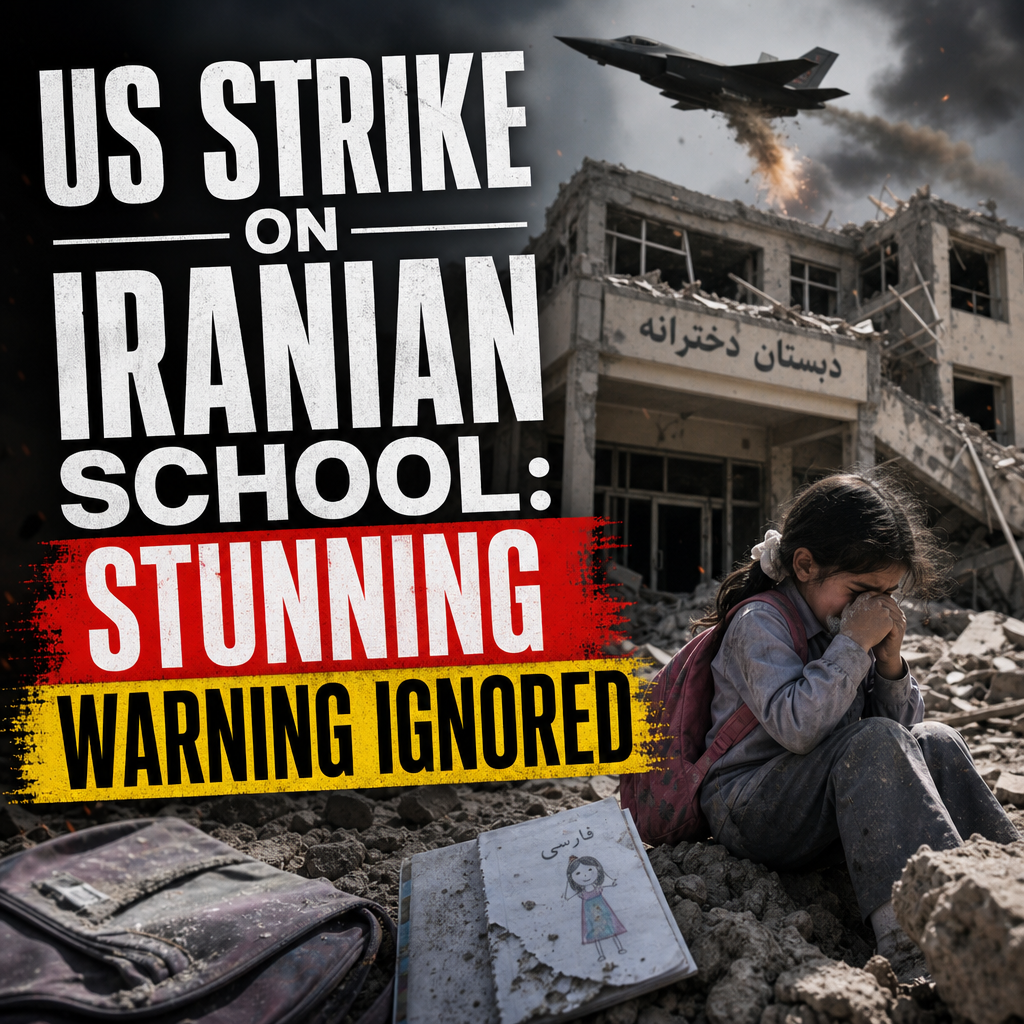
US Strike on Iranian School: Stunning Warning Ignored


US strike on Iranian school allegations have reignited a familiar and deeply fraught debate about how military decisions are made, what intelligence warnings mean, and who pays the price when they are ignored. Reports circulating through international outlets describe a stark claim: that commanders may have overlooked or discounted warnings before a strike in or near Minab, in southern Iran. Even at this early stage, though, the story is less about one single event than about the larger problem of foggy accountability in a region where military pressure, political messaging, and civilian harm often overlap.
What is clear — and what remains disputed
The most immediate takeaway from the reports is that there is no fully settled public record yet. Different outlets frame the issue through different lenses, but there is a common thread: the possibility that intelligence or field warnings were not acted on in time, or were not taken seriously enough. That matters because when civilian structures such as schools are involved, the threshold for justification is extremely high. Any credible warning ignored by military planners would raise serious questions about command judgment and rules of engagement.



At the same time, readers should be cautious about treating early claims as final fact. In conflict reporting, initial accounts are often incomplete, especially when access is limited and official statements are strategic rather than transparent. One source may emphasize alleged operational failure, another may focus on the broader security threat that prompted action, while a third may frame the episode as part of the widening confrontation between Iran and the United States.
That tension is important. It means there are at least three layers to the story:




– the specific allegation that warnings were missed or ignored;
– the question of whether the strike was lawful and proportionate;
– the broader political context that shaped the decision to use force at all.
Why the “ignored warning” claim matters
The phrase “ignored intelligence warnings” is especially powerful because it shifts the story from tragedy to responsibility. A tragic outcome can happen even when commanders are acting in good faith. But a warning ignored suggests preventable harm.
In practice, that distinction affects everything from public trust to military oversight. If a school was struck after advance signs pointed to civilian risk, then the issue is not only operational failure but also institutional culture. Were analysts heard? Did commanders discount local intelligence? Was the target verified carefully enough? These are not small questions, and they do not disappear simply because an operation was framed as necessary.
This is also why reactions in international media tend to diverge. Outlets skeptical of U.S. military policy often view such incidents as evidence of double standards: Washington speaks of precision and restraint while its actions produce civilian anxiety and, at times, devastating mistakes. More security-focused reporting, by contrast, tends to stress the dangers faced by forces operating in contested environments, where delay can create its own risks and where intelligence can be imperfect.
Both perspectives contain a piece of the truth. Military operations do happen in chaotic conditions. But chaos is not a moral shield. If anything, it increases the duty to verify targets carefully when schools, hospitals, or other civilian sites are anywhere near the operational picture.
US strike on Iranian school: what the broader coverage suggests
The wider international coverage around Iran and regional conflict helps explain why this story resonates so strongly. Al Jazeera’s reporting on the region regularly highlights the human cost of military escalation and the way civilian life becomes exposed when state conflicts widen. Sky News, meanwhile, often places such events in the context of diplomatic fallout, regional stability, and pressure on Western governments to justify their actions to skeptical publics.
Taken together, those perspectives suggest a more nuanced reading than either outrage or official reassurance alone. The core issue is not simply whether a strike happened, but what kind of decision-making culture allows civilian-risk warnings to be sidelined. If reports are accurate, the problem may be systemic: a mix of urgency, confirmation bias, and the tendency to privilege tactical success over civilian protection.
That is why the school setting matters so much. Schools are not incidental buildings. They symbolize normal life, and their vulnerability in war carries a particularly heavy moral charge. Even when states argue that military necessity left them little choice, the destruction or endangerment of a school is likely to be interpreted by the public as a sign that the balance between force and restraint has failed.
The hardest question: accident, negligence, or policy?
The most responsible conclusion is that the event cannot yet be reduced to a simple headline. There are three possibilities, and the evidence needed to distinguish them is not fully public:
1. A genuine intelligence failure — warnings existed, but were vague or contradictory.
2. A command failure — warnings were concrete, but decision-makers did not act properly.
3. A policy choice — civilian risk was known, but judged acceptable in pursuit of a broader objective.
Each scenario carries different implications, but all three demand scrutiny. The first calls for better intelligence sharing. The second calls for accountability. The third raises the most serious legal and ethical concerns, because it suggests civilian harm may have been treated as an acceptable cost.
Until independent verification is available, the most honest position is cautious skepticism toward all sides. The allegation itself is serious enough to merit attention, but not so complete that it should be accepted without evidence. That balance is difficult in an era of fast-moving conflict coverage, yet it is exactly what readers need.
A story about more than one strike
The deeper lesson here is that every report about a school, a warning, and a military decision becomes part of a larger trust crisis. When people believe warnings are ignored, they begin to doubt not just one command structure but the entire logic of intervention. And when governments respond with partial explanations or narrow denials, they only widen that gap.
If these reports are borne out, the question will not be whether a single commander made a bad call. It will be why the system failed to elevate the warning before lives were put at risk. If the reports are overstated, then the burden will be on investigators and officials to show exactly what happened and why the early narrative took hold.
For now, the most defensible conclusion is also the most unsettling: the incident, however it is ultimately classified, reflects the persistent danger of making military decisions in environments where the cost of error is borne by civilians first.

























